Showing posts with label exam time. Show all posts

Monday, 15 August 2016

How to speed read like an expert

Hello everyone and welcome to another blog post on the underage lawyer.

 One of the topics that have been coming up frequently in my conversations with others is speed reading. It’s a skill that you probably only think about when you have three days to complete an essay, and you haven’t started researching yet. However, speed reading is an important skill that can assist you in everyday life. It shouldn’t be disregarded as useless skills. 


Those who want to pursue a career in law need to know that they will spend every day of their life reading. 

tea, notes, teapot, teatime. study, studyblr, studyspo, theunderagelawyer

Client’s files can be anything from one to forty volumes long – and it’s your job to read and study them all. Reading is also the best way to expand your vocabulary and improve your thinking capabilities.

 Think of reading as upgrading technology. The more you do it, the better it gets. The less you do it, you eventually fall behind. Here are a few ways to improve your reading speed:


 1. Read a lot


 This is a basic essential. The more you read the faster you get. The less the read the slower you will become. Some scientific studies suggest that reading things on the screen of a computer is actually different to reading on paper. I’m not entirely convinced, but just to be certain you’re actually reaping the benefits of reading make sure you read both on and off screen. To improve your reading, think of it a little like sprinting. You have to run as fast as you can regardless of whether you can maintain the speed or not. When you are first beginning training yourself to speed read, don’t worry so much about comprehension. As your retrain your eyes to move along the page at a faster rate, you’ll begin to take more in.


 2. Pick the operative words 


library, theunderagelawyer, books. laptop, study, studyblrOne fatal mistake when it comes to non-recreational reading is that we read all of it. It’s very rare that all of the text will be relevant to you. To improve your reading pace identify what it is you’re looking for. Then pick three or four words that will describe that thing. From there you can run your eyes over the text. Every time you see a relevant word stop and read a few sentences surrounding the word. If it applies, congratulations. If it doesn’t apply, then keep skimming through. This way you’ll be able to ascertain just how relevant the material is. If you don’t see any words that seem relevant then either rethink your operative words or move on to the next paper. 

3. Read the first and last line 


There’s a lot to be said for introductions and conclusions. Remember learning about topic sentences in high school? Well, this is why you use them. Academic literature uses these to highlight what they’re going to say. When you’re in a rush, don’t bother with the rest of the paragraph. Just focus on the first lines of every article. By the time you reach the end, you’ll have a general idea of what’s being said. Additionally, if you read the last line of every paragraph, you’ll have a concluding statement and a linking statement. The linking statement usually explains how the next section will connect to the first. This is important because it will show you the pace that the essay evolves at and any assumptions that you need to be aware of. 


 4. Don’t sound the words aloud in your head 


book, read, reading, hands, girl, open, theunderagelawyer
When reading a lot of readers like to ‘speak’ the words in their head. This is a waste of time. Your brain is capable of comprehending the phrase without sounding it out. The more you read, the more you will be able to do this. But to begin with, help yourself to lose the habit by reciting random words in your head as you read. I began doing this by saying ‘aeiou’ over and over again while I was reading. To do this at first, it is best, to start with relatively simple reads. Try reading opinion articles or Buzzfeed pieces. They’re much easier to comprehend than academic literature and will build your confidence. You may be surprised at how much you can understand without having to focus too much on sounding out the words. 

 5. Dot point as you go 


A critical issue with speed reading is that people are concerned they can’t read quickly and understand the text. A simple way to of getting around this is to write one word describing the paragraph. Skim read the article as fast as you can and then summarize it immediately. The use of summaries in one or two words helps to lessen the fear of not understanding. The human brain is far less reliant on the sound of the words than people think. When reading the shape of the letters is just as important.


 6. When you don’t understand keep reading 


This may sound a little counter-intuitive. However, the biggest trap for slow readers is that they are hesitant to move on before they understand something. That will slow you down. Some points are poorly explained, and it will take multiple readings to understand. You need to know that if a point is badly explained it’s likely not essential to the argument and is irrelevant to your reading. It may also be that you’ll come to understand it when you read something later in the document. Your best bet when trying to rush your way through a massive pile of information is just to keep reading. Stopping and rereading things will break the rhythm of the reading. That may also cause you to read slower.

Wednesday, 25 May 2016

Why successful people talk to themselves

I want to talk about the importance of self-communication. There are a lot of buzzwords surrounding the skill of communication. It’s something that we all promote that we have when we apply for a new job or attempt to make new friends. It’s a skill that we could not survive in this universe without. Communication is as essential as breathing, but what is often forgotten about is self-communication.
organise, thoughts, study, map, mind map, writing, notes, pen, studblr, stablio
It sounds complex but the reality is simple
To some extent, self-communication is talking to yourself as if you were another person. It is strange to think about, as society often rejects the notion of talking to yourself as something that mentally unwell people do. But in truth self-communication is the process of the subconscious mind talking to the conscious mind.

I want to bring this to your attention, as a young lawyer, because I think it’s so important to understand yourself. A lot of lawyers work late hours, deal with traumatic or confronting situations and find themselves walking the line between morality and the law. These compromising situations are quickly repressed and ignored in the mind, leading to later issues.
Suppressing the complicated feelings that arise from facing such issues is unhealthy and such repression can lead to ignoring your subconscious thoughts. This is where I will raise the concept of self-communication.

What I mean by this term, is to talk to yourself as if you were talking to another person. For example, if you find yourself not focusing on a task that you know must be done, rather than getting angry you would initiate the self talk.

The conversation would begin with an investigation into why you were not focusing. Are you craving nutrients, sleep, comfort, warmth or are you in pain? These five things may appear obvious, but many people who are under stress or skilled at ignoring their body’s cues can often miss these essential human needs.

Food, foodie, foods, salad, healthy, green, take away, yum, girl, health, fit, fitness
Skipping a meal can be very bad for
your focus - and your stomach!
It’s not uncommon for me to lose focus only to realize I forgot a meal time or have goosebumps. This most commonly happens during the period before exams when there is lots of work to be done and little time to do it. Forcing yourself to ask the question may seem childish or irrelevant, but it is important to draw your attention to these five pillars.

It refers back to Maslow's hierarchy of needs. For those who aren’t aware, Maslow is a philosopher who created a theory that humans cannot function unless they have certain requirements met first. The lowest tiers include basic necessities such as shelter, safety, food, sleep, and comfort. They are not privileges to be awarded once your work is done.

A stern reminder to all students and professionals, your job will never be complete. The longer that you withhold things from yourself that are required for your body and mind to function properly the worse your attention and focus will become. Often your mental health will suffer before your physical, and that is why critical indicators such as lack of interest or regression to unhealthy habits, like overeating, hair pulling or overwhelming negative thoughts must be paid attention to.
Negative self-talk is the most harmful consequence of failing to build your skill of self-communication. Those people who cannot understand their subconscious needs often find themselves lost in a mixture of confusion, negative habits, and low self-esteem. It is not an insignificant correlation that lack of self-communication results in poor habits and frustration.

If you do have low self-communication and you’re struggling to focus, I’d like to extend a challenge to you. In fact, even if you’re not facing an issue at work, but struggling to come to terms with a complex event in your life I’d like you to attempt my challenge.
coffee, chocolate, hot chocolate, drink, cafe, trendy, red , colour, yum, color, yummy, delicious, heaven, tasty, fat, fatty
Maybe treat yourself to a hot drink after
writing this letter, you deserve it!

My challenge is to write yourself a letter. Please don’t type it, use a physical piece of paper and pen.
The letter must have four components
a)    Tell yourself what’s going wrong
b)    Tell yourself why you have to do this task
c)    Explain to yourself what’s been happening in your day, week and month
d)    Answer the question; what would I rather be doing?
If, at any point during your letter you feel that you’re leaving the question or statement that I’ve asked you to write about don’t stop yourself. Often putting pen to paper is a calming physical motion that encourages you to feel safe due to the repetition of the movement. This calm can help you to feel safe and for any overriding emotional issues that you may not have dealt with to come to the surface. This is why I encourage you not to stop yourself from going on a tangent and writing about anything that your brain takes an interest in.

Sometimes it may be that you have watched or read something that was emotionally disturbing. I have been impacted by news articles or legal cases that were morally challenging, emotionally disturbing or similar to something that I have experienced in my own life. However as we all lead busy lives, it's hard to bring that disturbance to the surface, leaving it to fester and destroy your work ethic or mental clarity.

I hope the letter that you write to yourself becomes a useful tool that you re-use to develop stronger self-communication skills. Sometimes initially writing the letter won’t bring you an immediate understanding of what is going on. Don’t assume that this means nothing is wrong. Our bodies and minds are more intelligent than we give them credit for and often they tell us more than we know. If it so happens that you read your letter back after writing it and actually believe that there is nothing behind it, that is okay, but if there is something unusual about your behavior I’d recommend leaving it for an hour or so.

red, rose,flower,pretty,image,garden,gardening,you can do it, positive, strength, strong, motivation, imagery,
You can do it!
After the time, away from your letter re-read it and consider any reoccurring themes. Sometimes you may realize that there was an unusual focus on losing an item, having a bad day or wanting something. These simple circumstances can indicate many different things, usually though they will reflect back on Maslow's hierarchy of needs and suggest that you are missing one of the lower tier requirements. Missing one of these requirements does prevent you from focusing your brain and having a productive work session.


Good luck on building your self-communication skills and I hope you will all promote this challenge to your friends and please tag me on #theunderagelawyer if you found my task helpful.

Friday, 9 October 2015

Don't let anxious thoughts ruin your exam!

So time’s almost up for a lot of my readers who are preparing for exams. I know a lot of you have been working super hard. So I thought it would be a good idea to run through some ways that you can calm yourself down in the last twenty minutes or so before your exam.

Remember that you can do as many or as few of these activities as you like –But do not revise! Nothing in the last twenty minutes that you learn from speed reading and with a panicked mind will help you on your exam. You’ve prepared and now you need to control those exam nerves with one or more of the following.

a)      Have something to eat


We all know about bringing a snack for during the exam, but studies have found certain types of foods and beverages can help to reduce stress so bring some of these along for before the exam.

1.       Something crunchy


Studies have found that crunchy food helps to alleviate stress levels. The night before your exam pack some fresh pieces of carrot and celery. This healthy crunch will relieve your anxiety and give you the calm needed to head into the exam room.

2.        A hint of citrus
food, comfort, diet, healthy, yoghurt, fruit, fitblr,tumblr, study, work,headache

An orange or other citrus fruit has been found by many researchers to help in the reduction of stress. It’s always best to prepare the night before, so cut up some pieces of orange and pop them away in the fridge for the morning. Just don’t forget to write yourself a note about it so you don’t forget.

3.       A warm brew


Tea or similar warm drink has been found to have a calming effect. Psychologists suggest that it is because it is similar to the warming comfort received in a hug or affectionate gesture. I wouldn’t recommended a highly caffeinated drink – but some peppermint tea or raspberry tea are wonderful treats before the exam.

4.       A little bit of sweetness
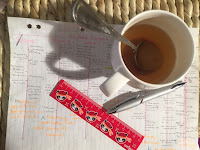

sweet, food, tea, coffee, drink, warm, hot, study, chocolate, ruler, stationary,studbly,tumblrSweet things do help to lift our spirits. While they should only be taken in moderation (and please don’t risk a sugar crash) some honey in your tea or a muesli bar with chocolate drizzle would be the perfect pick me up and motivating snack to nibble on while you relax and mentally prepare.
A lemon and honey drink may be the perfect way to combine these three options. Simply mix a table spoon of honey and half a tablespoon of lemon in with some warm or hot water and adjust to taste.

5.       Chew some gum


Lots of people get nervous stomachs before an exam and feel like they can’t eat. This is a perfectly  normal reaction that is a consequence of your fight or flight response. This response happens when your brain perceives that there is danger.

Before your exam your body is likely to perceive your fear of the exam as a psychological danger or a ‘stressor’. Neurotransmitters are sent through the neurones in your brain to warn your autonomic nervous system. These electrical messengers activate the sympathetic nervous system which proceeds to prepare the body to fight, flight or freeze.

– Freeze is a third response experienced by victims of abuse where they feel as if they are having an out of body experience and struggle to interact with their environment.

The sympathetic nervous system will stop digestive processes in order to divert energy to other parts of the body. When you chew gum this alerts the brain to the fact that you cannot be in danger because you are eating. The fight or flight response will generally begin to dissipate after a few minutes.

b)      Creative relaxation


Don’t just rely on food to calm your nerves. Try sipping on some lemon and honey while you do some of these innovative relaxation techniques

1.       Colour in a mandala


A mandala is a specific type of drawing that you can get off a google image search that aims to help you focus and relax. They are used by those who practice mediation and mindfulness. Doing one of these before the exam can help you to take control over your anxious thoughts.

2.       Draw something


Using a scrap piece of paper allow yourself the opportunity to relax and rest your mind. No one has to view or grade this artwork so draw what ever your please. But once again, do not relate it back to your exam work. Your brain needs to feel rested when you get into the exam room not stressed and tired.

3.       Visualize what you’ll do after the exam


Avoiding the actualities of what might be on the exam, allow your mind to wander to what will happen after. Since you’ve clearly been working hard try to arrange for a reward that makes you feel excited.
food, cake, sweet, treats, healthy, fat, drink, warm, winter, summer, phone, cafe, coffee


For example you might promise yourself that after the exam you will walk into town and purchase a hot chocolate. Or your might think about watching a movie or reading the next chapter of your novel. Try to make it something that you look forward to and you know will raise your spirits.

4.       Listen to music


Music can inspire and encourage you to continue your hard work. It can remind you of your goals and aspirations.

It’s personal choice whether you choose to listen to classical, rap, jazz or pop, there is no definitive research to suggest that there is any one significant benefit over the other.

5.       What a youtube video


A small slice of humour is neatly fitted into youtube videos, often lasting around three minutes, these can be the best way to distract yourself from your anxious thoughts. Maybe watch the video with a friend and benefit from their company as well.

There’s no research into youtube videos and calming thoughts but from personal experience I can promise that a video before your exam can help you to feel truly rested and ready to plunge into exam questions.

6.       Play with blue tack or putty


Blue tack is a great distraction object. You can pull it, twist it, squeeze it or throw it. For those who, like me, tend to bite their nails when they’re anxious this can be a great way to save your nails. It’s also a very subtle means of helping yourself to calm your nerves as you can hold a small amount in your hands and still interact normally with those around you.

c)       Get moving!


Sometimes our energy before the exam means that we get jittery and anxious. These techniques are designed to help you work that energy out. You don’t want to be exhausted before an exam but you should feel able to sit calmly.


1.       Go for a stroll

Walking beneath trees or some light to moderate exercise has been proven to benefit productivity and improve your focus. Get up and walk up and down the stairs or just around your exam area. The little bit of movement can go along way in getting you exam ready.

outside, pretty, outside, walk, healthy, fitness, exercise, awesome, study, exams,

2.       Stretch


Before an exam try to stretch out your neck and back. These are probably already a little sore from the amount of time that you have been spending studying at your desk. Stretch your neck and back slowly being mindful of any injury. If you ever feel too much pain stop immediately.

3.       Shake your hands


This is a part of a stress management process knowing as shaking. The concept is that by shaking hands or other parts of your body you are helping your body to reduce tension and remove stress hormones from the body.

4.       Freshen up


A quick trip to the bathroom and some water splashed on your face can help you to feel prepared and focused. While freshening up just check that you have completed the following;

  • Have you had a glass of water?
  • Have you checked in with a friend?
  • Have you checked you have pens?
  • Have you checked your stationary is working?
  • Have you checked where your exam is located?
  • Do you know where you will be sitting?
  • Do you know which bathroom is the closest to your exam room?


d)      It’s okay

Before an exam take the time to check that your thoughts are the right ones. Don’t be negative about yourself, be open minded and understand that it’s okay if you messed up during your study prep.
Those few minutes before the exam are examples of a true mental challenge. The trick is to be forgiving of yourself and to be proud of what you have achieved. Just by making it to the exam stage you’ve had to battle through weeks of classes, assignments, late nights and lectures. So good job you!

e)      Have a break


You might not have much time, but there’s still plenty of opportunities to help yourself to feel rested and ready for the exam ahead.

1.       Lay your head down


Simply resting your eyes can be enough to help you relax into a mindstate that is focused and ready to provide the information that you need. Remember an anxious mind is often so wound up that you will lose a good deal of time worrying during the exam about unnecessary things and make silly mistakes.

2.       Count from ten and back again


A common breathing technique is to breathe in slowly for ten seconds and then breathe out for ten seconds. This process of monitoring your breathing is a simple technique that can help to center yourself and calm your nerves.

3.       Sit by yourself for a bit


Sometimes socialising with others will make things worse than they already are. There’s no shame in needing to remove yourself from your group of friends in order to calm down and work through how you’re feeling. You can talk to them all you like after the exam!

Good luck with your exams and remember to be proud of what you have achieved,

The Underage Lawyer

PS: If you have any pre-exam tips feel free to comment below J

Saturday, 3 October 2015

Unique DIY study board; perfect for exam time!

Hello everyone, I hope you are all having a productive holiday – if you’re studying in Australia that is. Either way I have had a super productive week at home and thought I’d love to share this ‘study-planner board.’

It’s a quirky DIY that aims to help you shape up for whatever big events you have planned. This was totally customised to my colour preferences, so whatever colours or materials I suggest feel free to drop them out and try your own colours/materials.

Things you will need:
-          Calendar with space to write details on
-          ‘Priority List’ Paper
-          A4 or bigger decorative paper
-          Staples or tape
-          Pins and decorations to match
-          Pens
-          Tape
-          Weekly planner/ note paper to make one

1.       The board itself

I have a large cork board from IKEA. It costs $8 AUD at press time, but you can usually purchase them from your local craft or discount store.

 These are better than canvas or paper boards because they hold the pins firmly.

2.       Priority list


Write out your top priorities and then order them according to time, difficulty to complete and desire to do them.

It is important that you don’t overwhelm yourself with work. You will quickly become demotivated if you see a long list of seemingly endless tasks.

I use a ‘Top Three Priorities’ List from Kikki K. This list allows me to pick three big tasks for the day and break them into smaller chunks. My work now is more streamlined, polished and focused because I’m not trying to complete twenty tasks in one day.

It is also important that you remain flexible and work intuitively. This means that you need to acknowledge how you are feeling – some days you may feel stressed or anxious. Then it is important to take care of yourself and not to push hard workloads. Doing so will only force your body to become run down and inefficient.

3.       Weekly Planner


This planner can come in any form, you can draw up a seven-day grid and divide it into three-hourly blocks. I bought a ‘Meal Planner’ from Kikki K, this breaks my day up into four sections. It also allows me to block out time for each of my subjects throughout the week.

It is important to use these overall planners because it helps you to gain a picture of how you intend to spend your time. I like to think of this planning like budgeting. Each task demands attention, but there is only so much to go around. By using planners, you can economically and efficiently spend your time. You can also realise where you can improve your time management.

When you create a weekly planner – as you can see on mine, use different colours.

For me;

Blue are the reminders,

Red are loose tasks that I would like to be working on during that time

Brown are items that I need to complete for heath and well being

Purple means it requires planning

Yellow are unavoidable and essential pre-planned events
When completing your weekly planner always fill in pre-planned events first as you need to work around these.

Also, don’t forget to remember your mental health and well-being. Plan in times to exercise, snack and relax. These are not optional because without these activities you will lose motivation and focus for your work.

4.       Monthly planner


Monthly planners are useful for those who have bigger tasks due in months or weeks. They help you to keep track of days and deadlines.

Those who are studying for exams or similar be aware that it is easy to fool yourself about how long you have left. Using monthly planners can help you to remain realistic and practical when organising
social events and breaks.

Studying, particularly for school, can be gruelling and at times demotivating. My article on ‘endurance studying’ may help you find some ideas to beat this challenging issue.

5.       Notes and key reminders


I like to pin on my board some go-packs. These are similar to snack packs that savvy school-moms make.
In each of your subjects write out the topics you have the most difficulty with and summarise each of these. You could put them in snaplock bags or I have included instruction below to DIY cute paper envelopes.

DIY STUDY GO PACK INSTRUCTIONS

1.       Make your materials, how big they are will depend on your envelope size. I fill mine with flash cards and mind maps folded in half. 

2.       Make a triangle shape with your square piece of paper and crease along the middle
3.       Open out your triangle and then turn the paper to make a diamond and fold the lower corner up to the centre.

4.       Roll your paper up so that you can no longer see the small triangle and instead there is a bigger triangle.

5.       Fold one bottom corner of the big triangle in roughly towards the middle. Repeat on the other side, creating two flaps.
6.       With the top flap, fold it back so that you have a backwards triangle and then push it forwards to create another diamond.
7.       Fold down the top triangle and tuck it into the diamond to complete your envelope

8.       Now slide in your materials and label it.
9.       You are now ready to take your go pack anywhere! Happy studying!
For a video and more information click here

On my vision board, I also included some
  • -          Informative vocabulary sheets
  • -          Tickets to a Geoffrey Robertson lecture who I aspire to meet and work for
  • -          Pictures of friends and family
  • -          Mind maps for things I am trying to remember
  • -          Quotes that I find inspiring


Your vision board should include things that inspire you. I have in the past pinned up logos of universities that I wish to attend, scores I was proud of – or wanted to improve. Customise it to be something that inspires you and makes you feel confident in the future.
Next blog post will be giving you some tips on what to do before you enter the exam room.
Happy Creating!
The Underage Lawyer.


[[No products mentioned were endorsed products. I am not making any promise of quality or suitability.]]