Friday, 11 March 2016

Why I chose to become the underaged lawyer


write, handwriting, cursive pretty, jumper, cute, hipster, girl, gif
Oh my goodness look! I can post gifs on here!
My blog title often amuses the many people I meet. They associate being underaged with youth and innocence. I too do not separate these qualities from youth. Childhood and young adulthood feature the growth of curiosity

I believe one of the many characteristics of today’s children is that they suffer no fools. Many children state it out how they see it – I’m sure you’ve all heard ‘that’s dumb.’ Or ‘Why not just tell them no?’. The simplicity of youth is something I wish never to forget as a lawyer. 

Also, I chose underaged because being underage means that the law of the world cannot restrain me. No, I don’t mean unconstrained in the strict sense of law. I mean unconstrained in that the formalities of the world seem as flexible as a piece of string.

 If I don’t agree with it – why not say it? If there is a war- why not tell them to stop fighting?
 The older an individual gets, the more constrained they appear by the realities of the world in which they live.

Just because a lawyer's work isn't fun
doesn't mean I cant have a flower to make it better!
The role of a lawyer is always to dodge these realities. I see no human rights lawyer that looks at the world and thinks ‘well that’s the way it is, and that is the way it always will be’. I like to think of lawyers like a relay team. We all acknowledge that it should be one way and set about in a relay race to make it happen. Think back to the history of law – how did it develop? Because one day one person said hey – we should have a way to fix things when they were unfair!

And it took a long, long time to get close to what we have today – and even now there are still issues – yet we started as a group on a venture that appeared impossible. The judges that started the law were effectively holding onto the spirit of youth. An undaunted challenge to the future to improve things in the way that they morally should be. 

It is impossible to propose that a happy young person would not aim for a better tomorrow but it is not unprecedented that the contented mature person will merely seek to keep the peace for the present. I am now studying law and global policy, and often I find myself pulling back on proposing theories of change merely because I see troubles with current political sensitivities. However, I have determined to stop holding back. Present day sensitivities should be mere passing thoughts to proposals for future benefit. 

It is a selfish proposition that any change must occur within my lifespan. Rather I must consider myself a simple member of a relay team for a change. If I wish to see the globe operating with a democratic government, I must prepare myself to see turmoil and for the future youth of the world to see the success. 

Although Lord Denning never let go of that
underaged mindset - question all assumptions!
It is only in the mind frame of someone who is free from the constraints of the academic and political world that propositions for change can occur. It is undoubted that in present times they must be altered to minimize the conflicts which are faced, but they should never be modified during the future to cater to the conflicts of the present.

It is common knowledge that wars end. Whether the political sensitivities remain are purely up to the generation of today. I can see that as our world become interconnected and we suddenly have friends in every country across the globe political conflicts cannot remain. What person would hold a grudge against the country in which their beloved aunt lives? Or where a favourite actor spends the majority of their time? Our current views of states and borders are rendered irrelevant by transnational communications leading to the only conclusion – we must ignore the realities of today to develop a functional future.

I am currently writing an essay about creating a global government. I will admit that I have been torturing myself by attempting iron out exactly how differing cultures and ideologies could mix until I realized that was simply my perspective. 

I may view some cultures as roadblocks to change – but I do not see their population as road blocks. As communication and personal expression take the reins of country control so must these ideological setbacks fall away. Young people of today have seen the devastation of war and the crippling effects of food shortage, of racism, land loss and the importance of human dignity. 

Each of them represents a generation that has never considered a postcode or border when communicating with someone else. The conflict of the future will not lie with countries, and it is critical that as lawyers, businessmen and people of the world, we make plans to deal with a generation that does not understand there is a separation between countries. 

Is it sad to admit I've never actually used a
post code except in online forms?
After all, for my generation, where is the separation? I can see my friends in Italy, follow my auntie in England and enjoy the acting ventures of Benedict Cumberbatch all from one place. I have no understanding of the borders between countries – I’ll admit it took me time to understand why we had to draw lines. Yes, there is a great conflict in many countries, and not all people will view others in equal stead to themselves. But I propose the vast majority do and as time goes by the majority can reach out to the minority to develop the ability for the world to grow as a single community free from conflict and turmoil in order work entirely for the global benefit of all members.

 As overly confident as the proposition may appear I’d like to invite you to consider what it means to be a young person today. Think about having no understanding of having to wait to communicate; there ’s no need for physical contact in a fight – most ‘brawls’ between youth happens online. It’s purely verbal. In the future, the value of physical contest will not compare to the value of the written word. Global governance will become our centerpiece for the new war – taking form in the diplomatic art of discussion.
And since we're at the end of the post we can talk about fun things ^^^
meet my plant family; marcus the chilli and george the italian basil.

Friday, 26 February 2016

The major flaw in a young legal mind

This piece is available in audio form - can you believe it!? 

Recently I found myself questioning what it is that I love about law. For years, I've boldly claimed that I love everything about it, the good sides, the boring sides, the dull sides, the corrupt sides and the mind-blowingly complex sides.

However, I've discovered that I don't.

Don't get me wrong, I'm still in love with the law, I'm just coming to realise I don't love it all. Some may claim that this is the natural reaction of maturity. A realisation that law is as diverse as it is complex. No one area can be called the same for each were created to deal with a different issue.

Each field has its appeal much like various types of burgers. Vegetarian burgers offer healthy choices, but meat always seems more satisfying. Just like property law provides clear legal intrigue – but we all know human rights law holds the complexity that can only be described as the way your mouth waters when you see the juice run off a steak.

Some parts of law seem to sizzle with excitement and something in my brain can't help but choose it over other options. What's interesting is that I have never before considered I would choose one area over another.

And why not choose property law?

Who can deny the thrill of sending a caveat request or delving deep into native title to discover a real and continuous connection to the land?

What is not to love about intense contractual negotiation? Surely there is no lawyer that can't feel that warm-belly satisfaction of having both the best deal and a happy client. It's a rare combination but the drive to achieve it lives in the heart of every property lawyer.

So then why do lawyers find themselves not enjoying it – or any other branch of law?

I could give hundreds of analogies for where the enjoyment and deep-set love for each branch and denomination of law come from but it wouldn't explain what I mean.

It is not merely a branch of law I have questioned my love for, it is the traditional study of it.

In some senses, the study of law is not the law itself. The study of law often misses the raw truth about the foundations of our society.

For the study of it misses the fact that the law is merely concrete.

I am speaking in metaphor, where concrete refers to the dark grey, rough-edged and unattractive foundations upon which a house is built. The house is society and it is because of concrete that it can stand firm. Just like the law the concrete we know remains partly unfinished because there's always a chance of extending the house; somewhat unsightly, because there's no way to ever completely make it polished and mostly it does not carry the flourish and beauty of the house above it.

A builder, as a lawyer, will see the beauty in concrete – but I am beginning to question if the study of law can create people that appreciate such imperfection. Too often I have been taught to ask why there is a hole in the law.

Should it not be assumed that if there is such issue, it is open to interpretation? Do I honestly need another academic to tell me this?

As a young student of the law, I'd like to propose that the study of law is failing to build the legal mind. The legal mind must learn that law is not a solid block of polished marble which is the feature of a house. Rather it is the unpolished and unfinished block of concrete that holds up the house.

So what is it that I have fallen out of love with?

Arguably it is not a side of the law. Perhaps it is more a theology of law – I wish more academics openly embraced the imperfection and omissions of law. If we had such comprehensive documents not only would governments become overwrought with predicting, protecting and presuming but courts would lose their flexibility.

Is it not the beauty of the common law system, that it advocates for adaptability? Is not a national pride that our judges have an acute awareness of the need for interpretation when providing modern justice.

Is it not obvious that this openness to interpretation has provided justice in times of hopelessness. While easily overridden, statutes should not be a comprehensive source of law, rather they are a mere crutch upon which the courts rest interpretation.

I am no legal theologian but the more I study independently and work with professionals it dawns me that I have held the law to be perfectly created. Studies of law propose old law is overwritten with new law. But the truth is, there is no such thing as new law. Instead we merely refine and add to an old, imperfect foundation.


Students and lawyers all must realize the aim for perfection is not futile in law, but perfection in law will not come from what is recorded. Rather each lawyer must act as the mouth piece through which justified interpretation can occur. I have fallen out of love with calling law perfect – rather, it is imperfectly providing the lectern from which lawyers provide justice.

Lulu Hensman

Tuesday, 16 February 2016

Working Families; An issue kept well hidden

I'm sure those of you who follow me on social media are aware that I spent the last two months overseas, two weeks of which I was privileged to spend with a charity called working families.

notes, work, charity, study, desk, try, motivation, pretty, computer, technology, pens, blue, writing, office
My desk at working families :)
Working families is a charity aimed specifically individuals who are either caring for children or other sick individuals. Their bases currently only exist in Scotland and England but their work has been monumental to climbing over the wall of difficulties that both men and women face in the work place. It is steadily becoming a symbol of workplace flexibility which multiple studies have proven increases productivity [http://www.forbes.com/sites/ccl/2011/06/29/flexibility-can-boost-employee-productivity/#75eaa5b25d04]

My initial thoughts about the charity were that they would provide legal advice to all those who called on their hotline [0300 012 0312 ] however I quickly discovered their efforts were far greater and more diverse. Within the two weeks that I spent there I helped organize networking events, think tanks, policy presentations and research compositions. It was a massive variety and I can only say that the members within the office of working families had an adept ability to switch from paper work to practical work. I found my self constantly amazed by their empathy, communication and legal knowledge. Continuously the members were grounded, practical and realistic as they dealt with the problems of the modern workplace.

Some of the general issues included:

  • Helping with employer/employee relations
  • Explaining rights to leave, sick leave and other benefits
  • Analyzing potential discrimination cases
  • Assisting individuals in continuing work place progression
  • Decoding some of the work-related benefits

Those who live in any country where benefit schemes are enforced will know their complex nature. Yet Working Families manages to decode some of the broader issues of the new welfare policy Universal Credit [http://www.workingfamilies.org.uk/articles/869/]. At a policy presentation Working Families stood for the ability of low income families to have access not only to jobs but to quality child care.

Too often hard working employees are forced to turn down jobs that offer them more responsibility and pay because the jobs have less flexibility and mean that individuals lose out on benefits. This benefit loss can have the consequence of costing more than they are earning. Unfortunately research [http://www.bbc.com/news/business-35475350] shows the startling truth that Universal Credit is dropping off key benefits and losing that practical aspect of welfare.

Key reasons that families lose money is because;

  • Child care is too expensive
  • They lose flexibility increasing the need for extra care
  • Often gain expenses like eating out and more travel

Additionally without support families may face;

  • increased levels of stress
  • decreased time together
  • Higher levels of anxiety
  • relationship/life dissatisfaction

Interestingly one of the conferences I attended with Working Families highlighted that money was not the only factor influencing a families' ability to progress up a career ladder. After several focus groups the culmination of the responses revealed that families are craving more family time. Money is no longer a driving force of work. Yes it's a relevant factor but the study revealed that if more money sacrificed time with each other- progression in terms of pay increase loses out.
issues, poicy, conference, government, politics, democracy, important, young, vote, people, working, work,organisations
A policy conference with Working Families 

This need to spend time with family should not be looked upon as a factor of 'laziness'. Families, particularly those in financial hardship, often pull close together and form strong bonds. These relationships are vital for children to build strong foundations as they move into the future and for the healing of sick relatives. Some families are also facing the potential loss of sick relatives, meaning that money is not as valuable as time.

In this modern world we are seeing an increased value upon time, particularly time that can be spent with those we love. Working Families is striving to work with both employers and employees asa vital middle man that can strike up the right balance between the two.

The universal credit scheme was invented to produce a welfare scheme that did not punish individuals for being out of work. It attempts to understand the new value of family time and the issues face the 'sandwich' generation, where families are both caring for children and sick or elderly relatives. While it attempts to ensure that nobody will live off welfare for longer than necessary it supports the often tiresome and difficult transition between welfare and work. This is beneficial because;
  • Provides families with some respite when in financial trouble
  • Allows families to care without bringing in external help which can be expensive
  • Prevents individuals from being exploited while searching for a job
  • Provides people with dignity and pride
  • Allows for families to save while progressing through below minimum wage jobs and support themselves in an emergency rather than falling back to where they were

On welfare it is difficult to save money therefore giving people the opportunity to earn a little more as their welfare slowly decreases allows individuals to save some money. Savings provide financial security and comfort – which has been proven in the past to make people feel more comfortable and to stress less.

Multiple times I have discussed the impact of stress on the body. It not only causes many expansive physiological issues such as adrenal, heart and liver failure. These issues can tax already over worked families, causing child carers, sick carers or vulnerable individuals greater issues.

Stress has also been linked to psychological issues and outbursts. Anxiety, clinical depression and disorders such as schizophrenia or bi-polar are frequently connected to high stress levels. It is clear that stress can be minimized when fiscal stability is present. Although it is not the only factor in these issues.

The use of fiscal stability refers to the presence of these factors

  • Ability to pay bills as and when they fall due
  • The ability to afford food that is of reasonable quality
  • The ability to pay for some extra curricular costs such as eat-out food, entertainment or luxury service (massage, facial)*
  • To be comfortable with financial ability to prepare or repair any necessity equipment such as laundry machine, dish washing machine or light bulbs
  • Some ability to save (eg. To save 10% of earning) and still pay bills
* For families with children this is especially important because young children often like to participate in extra curricular classes such as dance, basketball, surfing or martial arts. These classes can tax financially strained families, sometimes causing social awkwardness for young children. While it is understandable that there must be some cuts to extracurricular activities it's reasonable to allow every person the opportunity to relax through one non-necessity service.

It is undoubted that if England wishes to encourage progression they must inspire financial stability. Financial stability is the way to encourage individuals to aspire. Unless the general populace feels that by accepting a job with higher levels of responsibility and better pay they will not lose out but gain valuable experience and satisfaction there will never be any progression. Other countries have also witnessed higher levels of productivity when minimum wage is at a 'living' level.

Notes, girl, young, people, study, writing, pretty, orange, desk, buy, pens, staedtler, popular, happy, birthday, present, christmas, gift, torts, law, employment, organisation, charity, giving
The steadtler pens in the top left corner actually
became very popular around the office
I will note here that organizations have raised the alert that minimum wage is the 'average' cost of living for the entire nation. It is important to know that a single person family will be able to live of the minimum wage comfortably while a family with two children will struggle. As lawyers it's important we don't pre-judge other families expecting that they can support themselves on minimum wage. Depending on circumstances it may not always be viable.

I would encourage young aspiring lawyers and current legal professionals to explore the website [http://www.workingfamilies.org.uk/] and consider becoming a Change Maker or registered donor today. The charity is constantly expanding the areas in which it works – working as a empathetic policy union that promotes for the well being of employees and employers rather than higher pay and lesser hours. It's difficult to summarize the exact issues that Working Families deals with because they are so dynamic and do respond quickly to the changing issues within the work place.

Uniquely the charity is also recognizing the growing paternal expectations for young fathers. Some closely related organizations that Working Families has connected with researched the growth in child-minding fathers. It was found that while women are still predominantly the primary carers, males were taking a larger interest in the primary care role for children. Currently men are limited in their ability to take over this role as prejudice is beginning to turn away from women and back towards men. Although males were noted to spend more time doing 'fun' things with children while women completed more domestic tasks.

In a study by [https://aifs.gov.au/publications/family-matters/issue-37/achieving-family-supportive-workplace-and-community] it was discovered that women felt more able to disrupt their working day to tend to a sick child then men. After further investigation it was concluded that often the work place culture was the leading factor in this feeling. While corporations may present a face of gender equality the reality for many males is that when they disrupt work for a child they often feel that their work is at risk.


Working Families is still trying to explore the extent of this cultural phenomenon. I hope soon I will be able to revisit the topic and provide a more comprehensive analysis of the new work-place prejudice. Although perhaps soon with support of Working Families the picture will present more equality and less gender bias for in this day and age woman are no longer primary carers, they are merely one of the two primary carers.

Lulu Hensman

Monday, 1 February 2016

The ultimate senior school/high school guide

Study Tips
a) Online Stuff
If you're a bit nervous about online things, then there are three websites you should try. They were essential to me getting through senior school. - Please do yourself a favor and just try them out.

Facebook
We've spoken a bit about this before, but I thought I'd explain to you how most senior students communicate and why it's best to build a Facebook profile before you start your senior years.

In my final year, we had a year 12 Facebook group, and it was how the girls set up planning meetings, practices, and organized parties. It was the easiest way for other members of my year group who I might not see every day let me know that I had to bring in something or lead a part of a meeting.

Even if you only go on it for school purposes and have minimal information about you, it's a good way to keep yourself in contact. Also, if you're ever unsure about what the homework is or need to get someone's notes, it's the fastest method to ask around the class.

Tumblr
Tumblr is different to Facebook. It is completely anonymous, so there is no need to put up a picture or name that's connected to you. The reason I'm suggesting it is because I learned a lot of valuable information from the stubyblr community.

hastag, tumblr, study, tips, friendly, community, study hard, recommendation, tumblr, notes, handwriting, technology, neat, youth, young people, popular
#studyblr on tumblr screenshot
On Tumblr, everything is organized through hashtags '#'. Under the hashtag '#study', '#studyblr' or#studyspo you can find a wealth of information about websites and techniques that can help you to complete your studies.

On the image, you can see the end of a study post where the poster is giving tips on how to give a good presentation in front of the class. There's also a post where another member is showing the homework they've completed. I found this motivating especially when I felt that I was the only person in the world studying, or just wanted a reminder that my hard work would be worth it.


learning, education, study, independence, smart, brilliance, genius,child, teen, student, college, university, smart, clever, struggling, better, parents
Screenshot of Kahn Academy homepage

Kahn Academy
Through this website, you can sign up with Facebook or manually through a form. It's an online site which stores educational quizzes, games, and videos. It has interactive and non-interactive components that allow you to learn from other teachers/experts without having to go and ask for help from your school.

The materials on this site can also teach you different methods that your school might not teach you. Various methods can be useful if you're struggling to reach the same answers as the other students.

You can see in the image all the classes I'm currently doing. You can log in and see all the classes that are available. I enjoyed the crash course history – but there are hundreds of courses and videos to try!


b) Homework
The senior school won't have as much homework as you're expecting. Unlike middle school, senior school teachers aren't interested in checking off a list of homework completed and uncompleted.

However, it's crucial that you do keep up with your assigned tasks. These tasks are paramount to building an understanding of what's going on in class and broadening your knowledge.

In senior school there are a lot of things that your teacher won't talk about in class – however knowing about those little extra bits of information can help to enhance your grades from a 'b' to an 'a.'

Tips (a quick list!)
  • Listen to instrumental music not lyrical. Otherwise, you'll get distracted
  • Write a list of /everything/ you want to get done, not just what you'd have to get done from school
  • Designate a study area and set it up with everything you might need
  • Skim read the related textbook chapter. Often the teachers will use the end of chapter questions in your tests- because no one ever reads them
  • Set a study time and a nonstudy time – be hesitant to break these times, because it's vital for your ability to balance work and study
  • Develop an opinion on everything that you do. Not only will this develop your communications skills but it will ensure that you look at every aspect of the subject to develop a proper opinion.
  • Don't ignore any comments that teachers make. Keep a notepad or word doc up in class and write down anything that is important. For example; 'students pay attention to this' – indicates that it may be an important topic that features in the test


c) When you struggle with class
When you struggle in class, it's important that you don't give up. Unfortunately, teachers may not always realize that you're struggling or having trouble.

Instead, you might have to take charge. To do so figure out;

> is it because you're not understanding the teaching methods used?<
Sometimes a particular teacher or method just doesn't want to stick in your brain. And that's fine there are plenty of other ways to learn a load of information.

  1. Put the information on to flash cards
  2. Write the information into an article (like you can see on my blog)
  3. Talk about the information with friends or family
  4. Look for a video on related information
  5. Talk to a head of the department or other teachers that you trust
  6. Arrange for an out school meeting
  7. Find an older student to give some notes or tutor you
  8. Ask a parent or family member

Telling people that you're having trouble may seem a bit scary, but it's vitally important that you're upfront about how your learning is going. In the senior years and university, you're completely in charge of what happens in your academic career. So now is the time to learn how to call in for help when you need it.

> Is it because you don't have an interest in the subject?<
Unfortunately some classes are a trudge – but I stand firmly by the fact that there is value in every class! If you're bored of your class try doing on of the following;

  1. Find real world applications for it
  2. Find a news story about it
  3. Draw a poster about it using all your favorite colors, actors and stationary
  4. Find someone inspirational in that field
  5. Figure out how you could use it in your future career
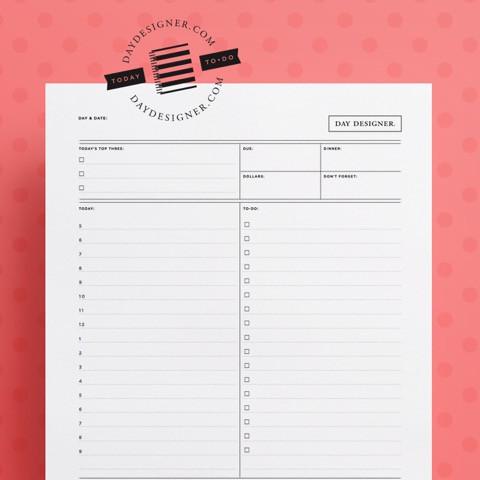
credits to tumblr daydesigner


e) Balancing

a) When it feels like too much
Lots of times in senior school I felt like I was facing a huge workload and then an enormous expectation from friends and family. It can feel like an epic amount of pressure.

However this is going to happen to everyone – don't stress! There are lots of ways to get through it!
credits to tumblr daydesigner
If you go onto Tumblr and search 'printables' you'll find lots of gorgeous looking sheets for putting in planners, writing lists or managing your time. I've taken a few screenshots of something I thought you might like – if you want them just go onto Tumblr and have a look – or you can find others of google images but be careful because they're not always available to download.


ai) Time management

A lot of people will tell you lots of ways to manage your time. Unfortunately, this can prove more distracting than beneficial.

Try the techniques that make the most sense to you but don't feel like you have to stick to them religiously! I've included a few websites that have helped me improve my time management but remember to do what works for you.

In the end, the best technique is routine and habit.

http://www.studygs.net/shared/mgmnt.htm

http://etudiance.tumblr.com/post/132244104798/the-pomodoro-method-is-so-important-and-i-feel

http://studyign.com/post/125463345667/soooooo-school-is-starting-in-about-a-month-for-me

f) Friends vs. School
In senior school social groups will change – sometimes considerably. You might feel the need to spend lots and lots of time with your friends to keep you little group together.

food, meal, health,y fit, yum, good, nice, warm, egg, curry, cheese, avacado, yum, avocado, bread, brown, study, friends, sharing, group, best
nothing like a meal with good friends!
Don't stress about keeping them close, yes they are your great friends, and you do have awesome memories with them but try to keep things in perspective. There are a hundred and a bit people in your year. That's plenty of people to connect to. If it ever feels like you're sacrificing part of your schooling to keep up a relationship with someone that isn't that interested in you – then drop it!

At the end of the day, you're not going to lose a friendship overnight, but you can fall behind quickly. Don't forget to spend time with others but please don't obsess over losing one friend or another. People will come and go the only thing that you can do is be friendly and welcoming.

Be yourself too – it was hard for me to get used to the idea of just being myself but at the end of the day I had to find friends that accepted that I could be sarcastic, obsessed with law and a massive Justin Bieber fan. It took time, but I did find people that loved that about me, and I know that you'll find people who like you for who you are too.

Lulu Hensman  

Wednesday, 27 January 2016

Don't tell me you're too young!


Don't tell me you're too young!


Recently I've had a few people contact me asking for advice and guidance for their future careers. Having this kind of interaction is great – I love helping people and giving tips – but they say the same thing every time.


I know I'm still really young...


desk, messy, notes, text, homework, goals, strive, achieve, work, positive, happy, outside, studyblr, tumblr
Goal planning can be messy and time consuming

The truth is that your age doesn't prevent you from taking steps to ensure your desired future. The more you allow yourself to use the excuse that you're young the longer it will take to achieve your goals. At every age, there is something that you can do to ensure your future career.

The Underage Lawyer started when I was still sixteen. At this time, I felt frustrated by the limitations I experienced because of my age. I was often overlooked by peers or turned down for work experience. However, never should you allow the 'too young to act' mentality infiltrate your mindset. Individuals should never restrict their efforts towards their goals because of their age. All people, young and old, are capable of reaching goals.

So often we look at ourselves in statistics rather than qualitative data. The best example is a resume; each one is a pure statistical list none of it explains who we are or where we originated. Something so simple as a resume shows the misconstrued values of society.

No longer do employers manually and tediously trawl through cover letters and references. Instead, keyword processors pick out the clients which can tick the right boxes. Similarly young people with lots of enthusiasm find themselves sidelined...and eventually disinterested.

No person can remain motivated when it seems as if there is no chance of opportunity. So often our brightest and youngest face a workplace that can't see them. For the under-undergraduates, there's no chance for professional involvement.

I hope that this blog succeeds showing that age is less of a limitation and more of an indication to employers of the potential a young person can hold. After all, if the only reason you have for not hiring someone is their age - what kind of logic is that?

To those wanting guidance...

While you're still in your childhood years, you should do your best to explore as many options as you can. As a teenager, there's a lot more that you can do to prime yourself for the role that you want to take on.
text, handwriting, students, motivation studyspo, inspiration, study, studyblr, studycommunity, studygram
Start your work right away- no time to lose!

Below I dot out some simple steps that you can take to help yourself find the path that you want to follow.

At 13-14...


At this age school should be your primary focus. Do some research to understand:


  • What the education requirements are
  • How competitive the field is
  • Any subjects you should pay extra attention to


The school is the perfect place for you to connect with your teachers. Ask them for assistance in finding the right path for your future career. Teachers have unique opportunities to connect with different organizations. Some of which may be able to offer you come-and-try days.


lawyer, notes, bird, animals, pretty, handdrawn, worth it, studyspo, tumblr, instagram, trying, law, lawschool. student
Use this time to find your passion and inspiration as well

At 14-15...


At this age school should still be your primary focus. But it is also the perfect age to begin delving
deeper into your potential field of work.


  • Create a mind map of all jobs related to your chosen field
  • Find the best educational institution for you to attend
  • Make a list of any requirements you haven't yet fulfilled
  • Find a role model(s) who you can research to find out what it is that made them so successful


At 16-17...
  • Begin to find some work experience, just a few days if you can manage it
  • Finalize any arrangements to complete non-age restricted requirements
  • Connect with potential employers and find out what they look for in their employees
  • Build a relevant resume
  • Find an alternative pathway for the course if the original plan fails


studybr, notes, law math study try work hard explain fail tax lawschool student high school studygram motivation inspiration
The plans you make may seem boring but they
are vital to your future
Above is not a definitive list, but a suggestion of the way in which you might like to plan out your career endeavors. Remember that you will face a lot of rejections, but it doesn't mean that you shouldn't keep going. Don't be discouraged by an uninterested or negative reaction. Instead, use it as an opportunity to build your internal strength and courage.


There's a lot to learn from rejection and starting young will help to accelerate you through that learning process.

Lulu Hensman

Sunday, 24 January 2016

What makes study enjoyable?

What makes study enjoyable?


tort, law, study, pretty, colour, hipster, tumblr, studyblr, lawschool,
Studying can have some great rewards
There are lots of people who struggle to find a motivation to study. Many people will view it as a meaningless or boring venture that holds no interest for them what so ever. Of course, this is understandable- who wants to sit in the one spot all day reading the same text over and over again?


Not me! And, I'm sure the hundreds of other people who force themselves to do this don't enjoy it either.


Why not free yourself from these thought patterns. Instead, accept the fact that your study-mindset needs a makeover!


When you study, you're expanding your entire perception of the universe. Studying brings your brain to understand entirely new concepts, ideas, and theories. 
By studying you are recreating the way that you perceive the world. There's nothing quite so incredible as that. If you're dreading the time you spend studying, it's time to read this post, and realign your views.


  1. Your brain needs to study and learn


This concept may seem a little strange – but it's true. Many studies have shown that when you keep educating yourself – your brain stays happy. Some studies suggest that without continued learning the mind becomes vulnerable to conditions that accelerate the brain's decline.
pretty, nature, outside, sun, walk, exercise, study, tumblr, important, sunlight, beautiful, flowers, daisies, yellow, photo
Study is just as important to your brain
as exercise for your body


Imagine when you study that your brain is another little person. They sit inside your head, unable to see, hear or feel. It is only when you  'think' about the things that exist outside your head such as weather phenomenon, friends or languages that your brain can experience the real world.


Without learning your brain is unhappy and restless. As lack of stimulation makes your brain unhappier, it works less at protecting itself. Therefore, it becomes more vulnerable to attacking forces leaving your body.


2. It's an achievement that you can earn on your own
Most results take a lot of time to reach or organize. Studying, however, is a long string of small goals that you can choose to either share or keep to yourself. Did you keep studying for three hours? -Great, reward yourself.


You studied hard and finally understood how the present participle works? Fantastic!


So often in life we find ourselves waiting and waiting and waiting – all for some reward given to us by others. The danger is that our personal satisfaction lies in the balance of what other people want and think. When you take control of your needs and achievements you finally receive the satisfaction that you deserve.

3. It leads to greater self-motivation and skills
When you build discipline you can move along the path of self-improvement and better your general abilities.


Lots of jobs, now require individuals to not only do their job but to do it without someone holding their hand the entire time. Gone are the days when your boss would drop a stack of papers on your desk and give you a deadline. Now employees are expected to work confidently and unsupervised.
work, study, cafe, thebook club, handy, coffee, studyblr, tumblr, inspiration, solitary, lonely
Sometimes the workplace is a casual but solitary place

The nonintraprenurial, inventive and confident employees quickly find themselves falling behind. Therefore motivating your personal work is vital to your continued success in the future. Don't fool yourself into believing that you will magically have high levels of discipline and motivation when it comes time for paid work. After all, self-control doesn't come quickly.


Instead, you must work to integrate into your everyday life.


4. You will have a better idea of how to balance your needs


Another advantage is that when you know what you feel like when you're tired or lazy, you'll be able to know whether or not to keep working. This is an essential skill that will help to maintain your health and work ethic well into the future.


healthy, food, study, tumblr, fresh, fruit, pretty, picture, hungry, white, table, orange
Although a nice fresh snack might
encourage you to study too!
At first, you might convince yourself that you're too tired to study or exercise. It can be confusing to know whether you're being lazy or tired.  The best tip that I ever read is to always to try something for two minutes. If you still can't do it after two minutes, then you can leave it and do something else. Generally by the end of the time you're immersed in the task and prepared to keep working.


After a few study sessions where I made myself study for at least two minutes I learned to tell if I was too tired to study. The difference is critical for all people to understand. Otherwise many individuals will push too hard one day and not enough for the next few weeks. I feel much more in control of myself now that I understand more about my limits.


You can learn to enjoy and appreciate your strengths and weaknesses


When you study on your own you will lean towards studying the things that you find easiest and most enjoyable. This beginning process is probably the time when you will enjoy studying the most. You'll feel invigorated, motivated and continuously rewarded- fantastic! Eventually, you will learn that you have to study the things that you find difficult too.


Once you start studying the complicated stuff, your grit and tenacity will be put to the test. There's nothing so hard as studying for hours and feeling as if you're getting nowhere. This is when you realize you're not good at this area of study. Now at your next job interview, you can describe this as your weakness.


Why am I so excited about being able to tell someone else about my weakness?


Accepting and talking about a weakness shows that I know I have room to improve and have a plan to do so. That makes you a person who has a proven ability to deal with any issues that the world of education, work or life can throw at you!


And that is why we should all try to study a little every day...

Lulu Hensman