Monday, 30 April 2018


Sunday, 22 April 2018
Thursday, 19 April 2018
I hired a Personal Trainer; 2018 Lifestyle Change
I hired a PT – personal trainer. After two months of going
on my own to try and hit the daily exercise targets I’d finally realized that
DIY-ing it has its limitations. I was keen to try out some harder and more
complex exercise to see if there was a way to fast track my performance.
I’d watched a lot of fitness blogs and I’d seen many cool
moves I was keen to learn – mostly just to show off in the gym. Most
specifically I was keen to learn to do a ‘box jump’ a movement where you jump
on top of a 24 inch box and land in a squat position. The second one I was keen
to get started on was a squat rack – a machine which helps you to squat using
heavy weights. It’s a very popular machine for fitness bloggers – and I was
pretty inspired at this stage.
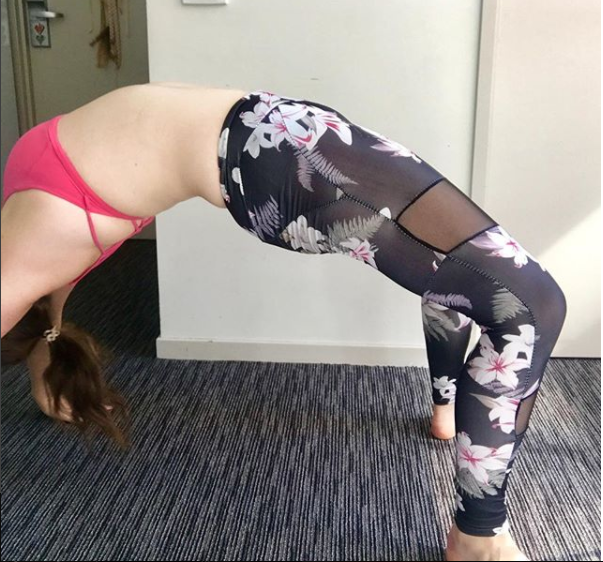
I’d met the girl I worked with previously on a Friday
morning boot camp that the gym ran. I had started going out of general interest
– thinking that it might help me figure out how to get more out of the gym.
It’s a 45 minute high intensity interval training session (HIIT). HIIT are very
popular modern work outs as they raise your heart rate and increase your after
caloric burn.
There are two types of calorie burn – there’s active
calories and resting calories. Generally speaking, you have to move to burn
calories – however, post exercise oxygen intake can increase your resting
caloric burn to up the number of calories that you burn overall. This is
especially true for those who struggle with metabolic syndromes as was shown in
a study in the Scandinavian journal of medicine & Science in Sports
(Larsen, Welde, and Martins, 2013). However, this effect can be triggered by
any high intensity exercise such as Tabata – a 20 second on 10 second off
interval training. For the studies of afterburn effect fast paced cycling was
used, where the participant was working at 75-80 percent of their max heart
rate.
I had my first session with a personal trainer on a Monday.
This was a lot less intimdating than I’d built up in my head. It was more like
a work out with a friend than what you see in the movies. We went through some
exercises that we hadn’t done before, talked about my performance goals and
worked out ways to reach them.
The next training session I was keen to try a box jump. – It
was then that I discovered while a lot of these things look easy they really
require more control over your muscles than just the ability to jump onto it. I
could get onto the box but quickly lost my balance and fell off onto the
ground. After that I chose to focus on building my balance instead of falling
on my back several more times.
After that minor set back I was thrilled to be given
alternative ways of reaching my goals. Previously there’d been a lot of
research and work on my behalf- that wasn’t always successful. Making the
decision to work with someone else allowed me to tailor my program so that I
could see my progression in strength, balance and agility and I could do so
without feeling disheartened.
 That being said my workouts – while they were good at
creating my progression and allowing me to build what I wanted to build better
strength and talent in. There still were movements in my routine that I wasn’t
thrilled about doing- mostly because while they were good for my body they were
so tiring! However, I could see changes in my ability within two weeks Before
if there was one thing I never did it was jog. I could sprint – but not jog for
a sustained period of time. Within two weeks running for ten minutes possible
and something I did.
That being said my workouts – while they were good at
creating my progression and allowing me to build what I wanted to build better
strength and talent in. There still were movements in my routine that I wasn’t
thrilled about doing- mostly because while they were good for my body they were
so tiring! However, I could see changes in my ability within two weeks Before
if there was one thing I never did it was jog. I could sprint – but not jog for
a sustained period of time. Within two weeks running for ten minutes possible
and something I did.
I’m still working on the routine two months I haven’t
achieved my major performance goals yet but hopefully by the endo f the year
I’ll be able to update. If you’re looking to make some changes in law school
and wondering if it’s worth the effort – I would recommend starting out with a
personal trainer – going it alone for a few months is hard. Keeping up
motivation and knowing what to do took a lot more time and effort than I had
expected – especially I you’re hoping to reap the full benefits of exercise and
not just a random achievement.
As of February I have definitely experienced some cognitive
benefits. The biggest I’ve found are;
·
Increased focus
·
Better problem solving
·
Increased self discipline
They definitely weren’t immediate changes and I’m not super
woman status yet. However, the lifestyle change has definitely increased these
areas of my life and I'm looking forward to seeing their impact on my academic
endeavours.
Thursday, 5 April 2018
I tried a non-detox healthy-yet-flexible diet?
I went on a macros diet. In the
past I’ve tried to eat healthy- even
going so far as to be a raw fruitarian for a little while. The idea of
nutrition affecting your whole life is something I really resonate with. I
think if you eat whole unprocessed foods you feel a lot healthier, happier and
have a lot more energy. But – law school makes it hard to follow an unprocessed
diet.
 |
| Typical fruitarian spread |
My law school is literally five
minutes from the nearest dominos – and they don’t charge delivery to the law
school library so you know pizza is my life source when it comes to exam time.
And sadly, all that processed food took a much heavier hit against my body than
I realized.
Noticing that I was more sluggish, and had way less motivation to get things done than usual I determined that I should go on a detox. I started doing a bit of digging to find the best detox for me – having such an affinity for fruit I was keen on a juicing diet – but there’d been a lot of discussion around me about a bone broth detox. But the more reading I did – the more hesitant I became – about both juice cleanses and bone broth. Lately there’s been some hit back against detox diets, with nutritionists claiming that a healthy body can detox itself – and these diets are just a new form of starvation diets. I’ve linked in that sentence an interesting article from “the conversation” which I thought was a good starting point for research into detox diets.
By the end of my research spiel I’d
definitely wiped going on a detox off my mind – but I still felt anxious going
into a grocery store to try and figure out what exactly was going to make my
body healthy and ready for another semester of law school. Because I wasn’t
really looking to lose weight, mere calorie restriction didn’t seem like a
reasonable option – especially since you can eat anything on calorie restriction
– it’s just how much or little of it you eat. I was more interested in fueling my body on for
study – and there’s not a lot of ‘diet plans’ for that.
 So after a bit more prodding
around (admittedly on the fitness side of youtube and Instagram) I found out
about an eating lifestyle called ‘if it fits your macros’. Often shortened to
IIFYM is a modern day way of eating that focuses on three key nutrients known
as macros – fat, protein and carbs. These three nutrients are essential for
your body and help you live a healthy life.
So after a bit more prodding
around (admittedly on the fitness side of youtube and Instagram) I found out
about an eating lifestyle called ‘if it fits your macros’. Often shortened to
IIFYM is a modern day way of eating that focuses on three key nutrients known
as macros – fat, protein and carbs. These three nutrients are essential for
your body and help you live a healthy life.  An easy way to try this method out
is to download the myfitnesspal app on your phone and simply enter in the foods
you eat. It’s basically like a more advanced style of calorie counting – but unlike
calorie counting I was looking at the nutritional value behind the foods I was
eating. Because I was paying more attention to nutrients it wasn’t so much that
I could eat processed junk through the whole day- because I’d run out of fat and carbohydrate
quickly.
An easy way to try this method out
is to download the myfitnesspal app on your phone and simply enter in the foods
you eat. It’s basically like a more advanced style of calorie counting – but unlike
calorie counting I was looking at the nutritional value behind the foods I was
eating. Because I was paying more attention to nutrients it wasn’t so much that
I could eat processed junk through the whole day- because I’d run out of fat and carbohydrate
quickly.  As of writing this article I’ve
been on IIFYM for about five months. It’s been okay – it’s definitely a
learning curve. When I first started I had to drop about half the amount of
fruits and vegetables I was eating – which I thought was super counter
intuitive because obviously fruits and vegetables are good for you.
As of writing this article I’ve
been on IIFYM for about five months. It’s been okay – it’s definitely a
learning curve. When I first started I had to drop about half the amount of
fruits and vegetables I was eating – which I thought was super counter
intuitive because obviously fruits and vegetables are good for you.
However – they don’t have a lot of
fat and protein. So I had to turn to
pintrest to find some alternative recipes to hit the optimal amount of fats and
proteins for someone like me. To increase fats and proteins I found myself
eating a lot more fish, beans, tofu, kidney beans and avocado. These healthy options
for fats and proteins added a lot more variation to my non exam time diet – and
most of time I’m not really interested in eating out.
 |
| foods I actually ate while doing IIFYM |
When it comes to eating out – the app
on your phone is the most amazing invention since the dawn of time. My fitness
pal (not sponsored) has a great inventory of restaurants and take out foods
like pizza, sushi, pasta and dumplings so when I ate out I just entered roughly
what I ate and had a good idea of the nutritional break down of the food. – I could even track my weekly take out night
and over time I learned how to eat in the week so that one night of heavy
sodium pizza didn’t leave me feeling sluggish and headachy.
An interesting feature of macros
dieting that definitely confused me at first is that it is highly
individualised. For example a law student may need more proteins and fats
because proteins are important for making hormones and enzymes, and fats help
the absorption of certain essential vitamins like A, E, and K. While
carbohydrates are less useful overall as not so much energy is expended
throughout the day. However, an athlete will need to consume more carbohydrates
and proteins to help repair tissue and fuel their body to replace the energy
they’ve expended. Additionally, your macro requirements may vary from day to
day – for example I exercise everyday except for during exam time. So pre-exam
time I need more proteins and carbohydrates to fuel me throughout the day, but
during exam time I need more fat to help store energy and absorb vital nutrients
to fuel my brain.
Unlike a detox the IIFYM diet is
intended to be a way of living. It is design to fuel your body well and allow
you to indulge in treats because you wish to and not because you’re desperately
craving them. I’m still doing the IIFYM lifestyle – and hoping to continue it
for a lot longer. I may have struggled to lose some of my fruit intake in the
beginning – but I definitely don’t regret it!
Thursday, 8 March 2018
I change my study habits; Lifestyle Change 2018
Lifestyle
changes are all about making a change for a more positive you. The aim of them
is to become more efficient, productive or attractive in some way. Generally we
know that by doing something ie. Running more, we will become more efficient at
it. However, there are some categories of self improvement that are not as
clear cut. The most obvious of which is academic achievement. There’s been a
lot of focus on smarter study – but whatever that is, is generally elusive to
the press and the scientists themselves. What had been a common feature of
universities is that they will provide three avenues of learning one subject
·
Lectures
·
Tutorials/seminars
·
Readings
Their
claim is that all three must be completed in order to have learned a subject to
a sufficient level. This is obvious in error as few students ever bother to
complete the one, let alone the three, areas.
The
second claim is that by attending in-person one will gain greater benefit from
tutotirals and lectures than listening online. There is little evidence to this
effect – especially little on how students between 16-25 find learning in real
life as compared to online.
The
third claim is that written notes not typed notes create more pathways in the brain
that facilitate the learning of the subject.
 |
I’m
curious to see if I make a lifestyle change in regards to my study patterns –
will I see a grade improvement?
At
university there are multiple ways you can study; I like to catagorize them
into three broad categories.
The Ghost
The
ghost is the student that does the work, does the readings but never goes to
lectures. Those things are recorded – why bother turning up if you’re not going
to be graded!? The ghost’s logic is if they’re only there to get a degree the real
experience of a university has no meaning. They’re just there to do the work,
get out and get paid.
These
students are very self-driven and enjoy being able to cruise through the course
on their own – without any interference from the lecturer. Unless there’s a
graded tutorial required you’ll never see this student. They either hide out in
their room or tuck themselves into a cosy corner of the library.
If
you end up in a group assignment with this person you better make it clear you’re
not there to do all the work – because they’re not doing more than what they
have to. If you keep doing the work for them they’ll cruise on through.
Should have but didn’t
Much
like the ghost student this kind of student never turns up to lectures. But
they also don’t do the readings, they rarely make it to tutorials and they’re
pretty blasé about the final exam. In reality Ps get degrees and working harder
than 50% is a waste of time.
Their
work ethic affords them a lot of free time and they’re often richly involved in
university life. Things like sports, languages, pub crawls – this kind of student
is all over it. But…their grades suffer for it. To see this student getting any
higher than a C is a rare sight.
Lecturers
warn you that you can’t do a class without the readings, the classes and the
lecturers – but these guys know from personal experience – a bit of common sense
can get you places. – That and a few late nights of cramming before the exam.
The Over Caffeinated
The
lectures, the readings, the additional readings, the supplementary notes – most
common in freshers, this kind of student has done it all. There’s nothing you
can surprise them with – in fact if there is anything that’s potentially unusual
about the course they’ve probably already emailed the convenor to confirm that
was the intention, worked out a draft answer and they’re double checking it
now.
This
kind of student spends hours studying each day. Sometimes at the expense of
their own free time – and as much as we like to claim that we don’t – we’re all
a little jealous of the fact that they have such amazing self-discipline.
I
personally fall somewhere between a ghost student and the over caffeinated – as
most students probably wouldn’t fall directly into one category or another. The
difficutly of the course, the amount of interest you have in it, whether it’s semester
one year one or semester two year five – all play a huge role in determining
how much time you’re going to invest in this academic endeavour.
I’ve
always been curious – as a chronic non lecture, tutorial avoiding, and
generally work minimising student – if I did all the readings, attended all the
lectures, tutorials and did every piece of additional work – would I obtain the
elusive HD?
This
semester is the beginning of my third year – the very point of the up hill
marathon to finally getting my law degree. One should never start a marathon
aggressively – but in law school the harder you work – the more you can hope
for a job at the end of it.
So
this semester I am going to take three courses – a full
time load – and for each these I will complete all recommended and supplementary readings, attend all lecturers, all tutorials and all seminars.
 |
| Wish me luck! |
In
total it adds up to 46 hours of work (approximately) per week. This is
calculated following the course guides but in all honestly it’ll probably add
up to more, so I’m preparing for this. Over the course of the semester I will
be tracking my grades and then combining them at the end of the semester into
one average grade. This will then be compared to the average grade of the prior
semester in which I would listen to lecture recordings, attended the minimum
number of tutorials and never did readings.
So
in six months time we should have an allegorical response to the question ‘if I
tried harder- would I do better?’
If you’d like to join me on my lifestyle journey then
you can connect with me on Instagram, tumblr, twitter or facebook!
Instagram: the_underage_lawyer
Tumblr: theunderagelawyer.tumblr.com
Twitter: @underagelawyer
Facebook: @theunderagelawyer
Subscribe to:
Posts (Atom)